Small London bathrooms demand thoughtful planning, not guesswork. When every centimetre counts, the right layout, fixtures, and storage choices can mean the difference between a cramped box and a calm, spa-like retreat.
In this guide, we walk you through ways to maximise space, from wall-mounted toilets and floating vanities to wet rooms and corner showers tailored to typical London floorplans.
We also cover discreet storage, cost drivers, and 2025 design trends, so you can balance luxury with practicality. Whether you live in a period terrace or a compact flat, you’ll find workable ideas here. Use it to brief your renovator with confidence.
How Can You Maximise Space in Small Bathroom Renovations?
Maximising a compact bathroom comes down to three principles. Zone wet and dry areas, reduce wall projections, and keep sightlines clear to increase perceived volume. Wall‑hung fittings, frameless glass screens, and continuous floor finishes cut visual and physical clutter and free usable floor area.
Layered lighting and reflective surfaces then enhance depth and comfort. Below, we explain the fixture choices and visual techniques that save projection. These approaches make a small footprint feel organised and luxurious.
Best Space-Saving Fixtures for Compact Bathrooms
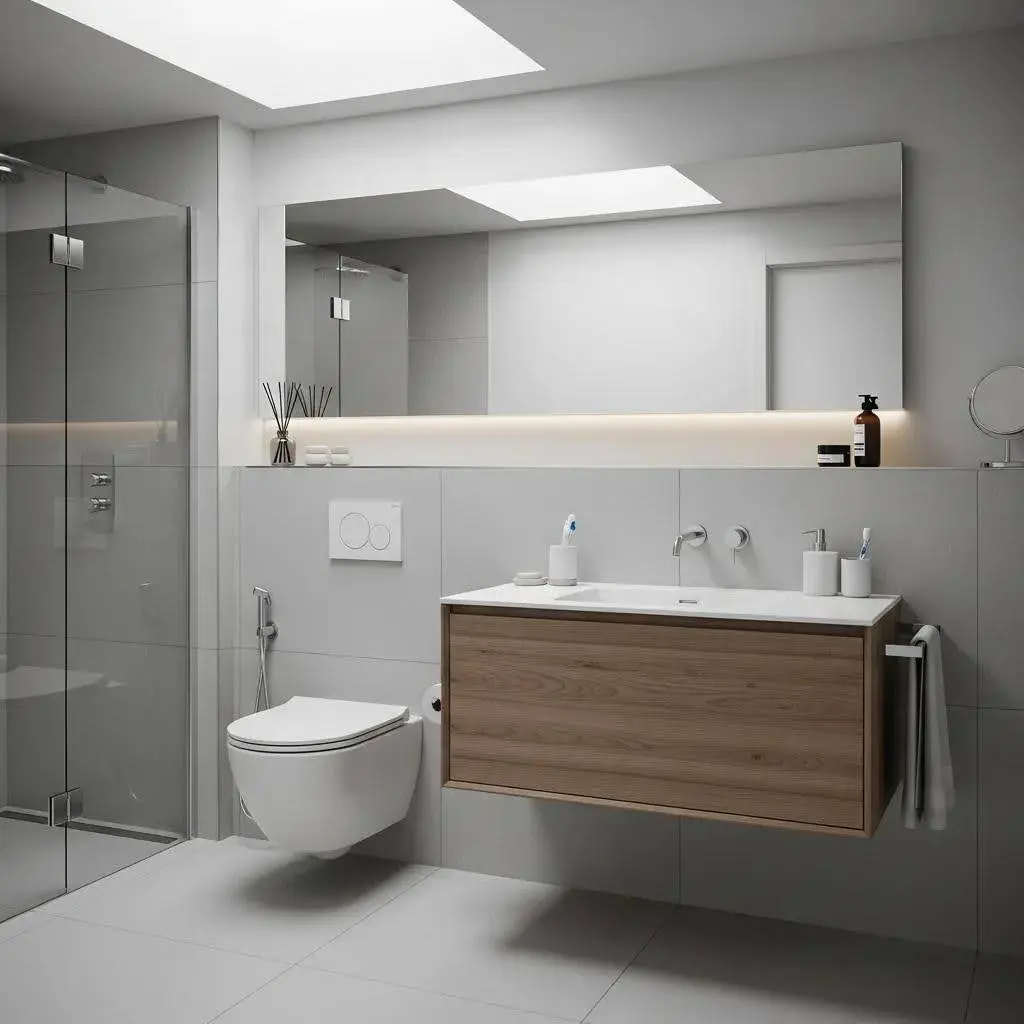
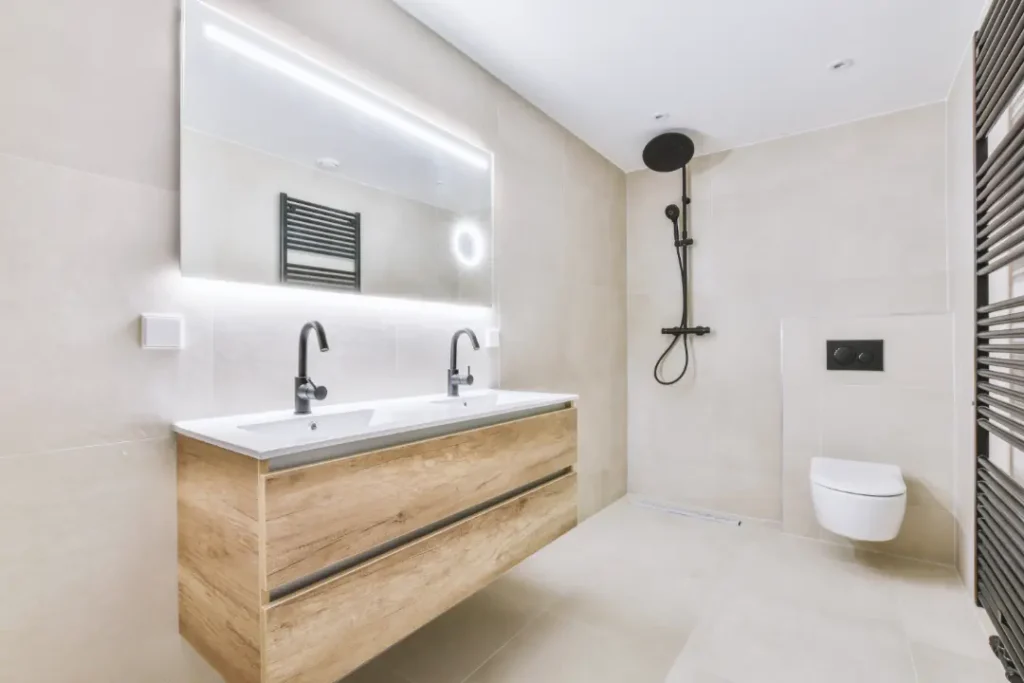
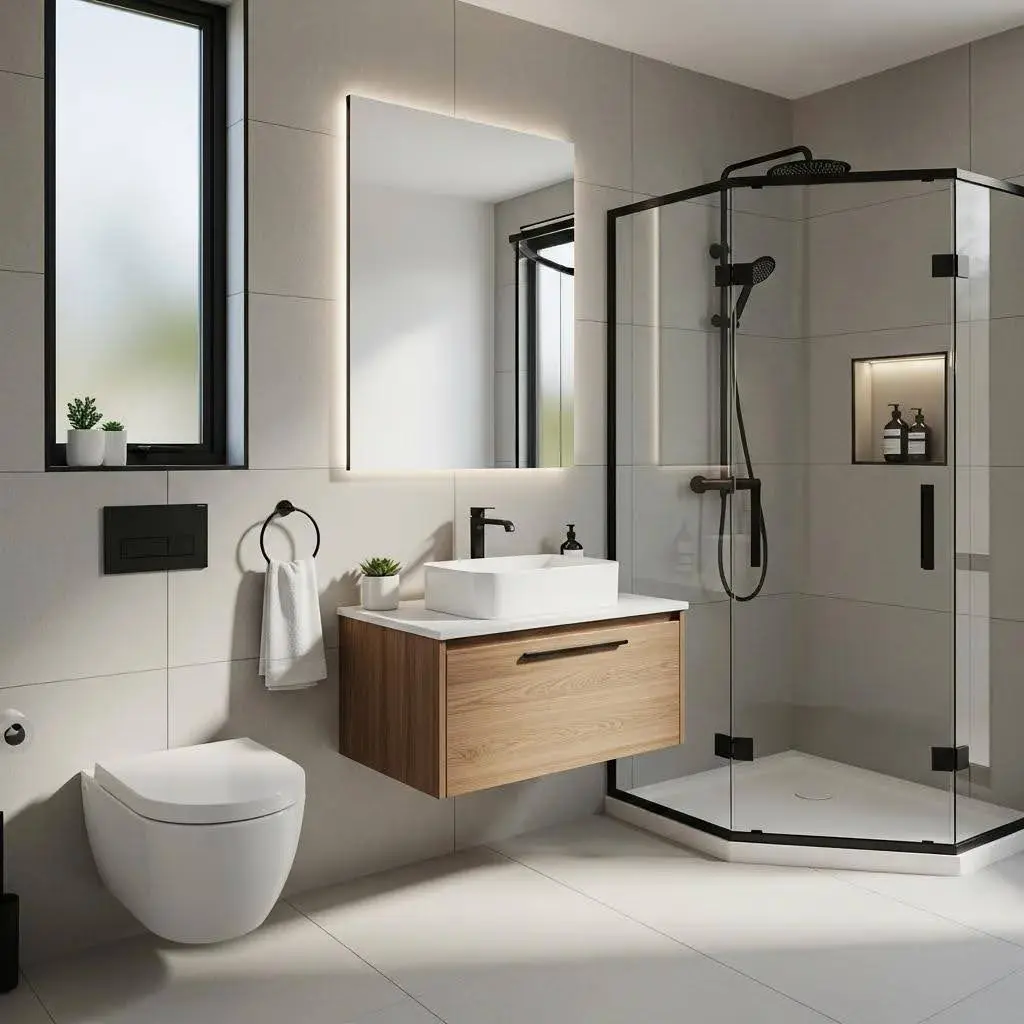
Choose fittings that reduce projection without compromising usability. Wall‑hung toilets with concealed cisterns typically reclaim about 15–20 cm of floor projection, improve cleaning, and open up circulation.
Floating vanities give the same visual floor clearance and can hide useful storage without bulky legs. Corner or quadrant showers concentrate the wet area and save footprint, while compact basins preserve approach clearance in narrow corridors.
These options balance ergonomics with space economy and create a clearer circulation path in tight London bathrooms.
Quick list of top fixture choices and why they help:
- Wall-mounted toilets: reclaim floor projection and simplify cleaning.
- Floating vanities: create visible floor space while offering integrated storage.
- Corner or quadrant showers: reduce shower footprint without losing showering area.
These fixtures improve movement and visual openness, making it easier to choose the right combination for a given plan.
Fixture comparison table: We compare common space-saving fixtures by key attributes such as projection saved, visual impact, and installation complexity. This helps you weigh trade-offs quickly when planning a small renovation.
| Fixture | Attribute | Typical Value |
|---|---|---|
| Wall-mounted toilet | Projection saved | 15–20 cm |
| Floating vanity | Visual floor clearance | High |
| Corner or quadrant shower | Footprint reduction | Up to 25% |
This comparison highlights which fittings deliver the clearest space gains and helps you balance visual effect against installation complexity. Use these values to prioritise upgrades when floor area is limited.
What Are Effective Layout Designs for Small Bathrooms in London Homes?
Effective small‑bathroom layouts in London follow practical archetypes shaped by door swings, existing plumbing, and window positions. Common plans include corner showers, wet rooms, galley bathrooms, and L-shaped arrangements.
Each is chosen to suit constraints such as original pipework, floor-joist access, or sash window clearances in period properties. At TMT Central Bathrooms, we adapt these archetypes with careful project management and a luxury finish mindset.
This approach keeps designs working within borough regulations and period details. The sections below explain when to favour a wet room over an enclosure. They also show how to scale bespoke elements for small spaces.
Corner Showers and Wet Rooms for Optimising Tiny Bathroom Space
Both corner showers and wet rooms concentrate the wet area, but they pose different demands and visual results. A corner shower uses a framed or frameless screen to contain moisture with relatively low disruption and cost.
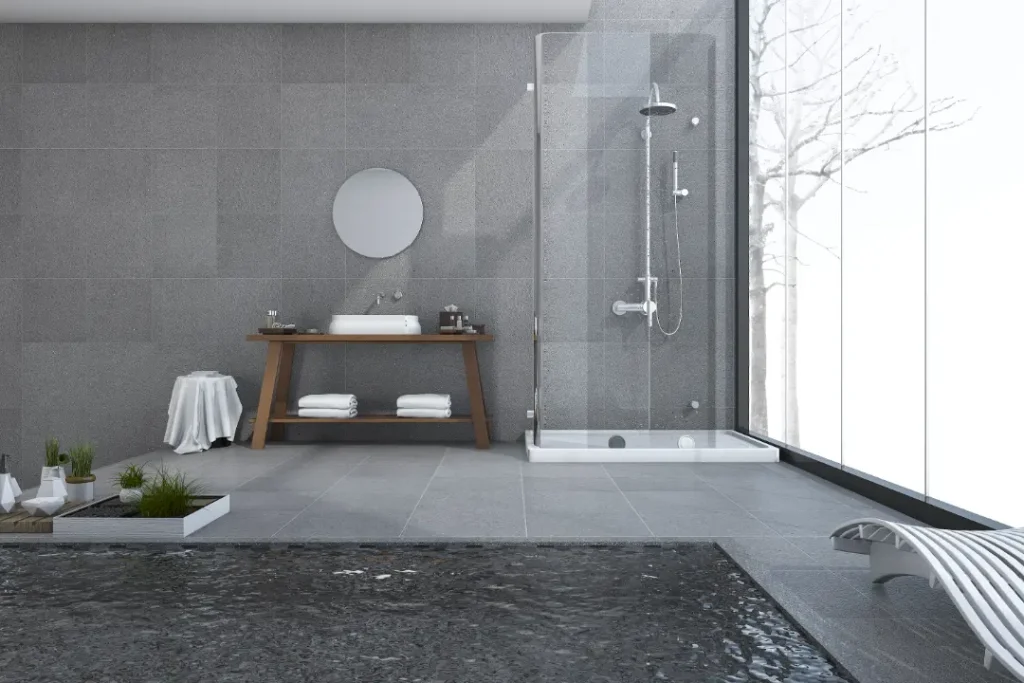
A wet room removes the enclosure entirely. It relies on graded drainage and robust waterproofing to create a continuous floor plane and a minimal profile. Wet rooms often feel more spacious but need upgraded ventilation and precise waterproofing to meet regulations.
Decide based on ceiling height, drainage feasibility, and your tolerance for the extra waterproofing scope.
Bespoke Luxury Design Elements for Small London Bathrooms
Luxury in a small bathroom is about scale, finish quality, and lighting rather than oversized fittings. Italian‑effect tiles in a modest format, mixed‑metal fittings, and tailored cabinetry deliver a premium feel without crowding the room.
Built‑in cabinets that follow wall lines and feature integrated LED task lighting preserve circulation while adding refined storage. Frameless glass screens maintain sightlines and enhance perceived space.
Smart touches such as underfloor heating on a thermostat or touchless taps can be specified for compact footprints. They boost usability without adding bulk. These considered choices lift a small room while respecting its architecture.
How Can You Maximise Storage in Tiny London Bathrooms?
Storage in very small bathrooms should be vertical or recessed so you avoid freestanding units that interrupt circulation. Recessed shower niches, mirrored cabinets, and slim tall units above toilets or behind doors make use of otherwise wasted depth. Matching finishes to surrounding walls and choosing concealed pulls or push-to-open doors keeps storage visually quiet while essentials stay organised.
The subsections below cover placement guidance and multi‑functional furniture ideas to suit different layouts.
Vertical and Recessed Storage Solutions for Small Bathrooms
Vertical storage and recessed niches convert wall cavities into low‑profile storage with minimal projection. Place recessed niches in showers and above baths at elbow height and size them for typical bottle dimensions. Over‑toilet cabinets should be shallow (150–200 mm) so they don’t reduce head clearance.
Tall slimline cupboards hide linens and supplies, while mirrored fronts double as light‑boosting surfaces when paired with task lighting. Combined, these approaches preserve tidy circulation and maximise usable storage in narrow London footprints.
Intro to storage list: practical storage approaches for tight London bathrooms.
- Recessed shower niches: Keep toiletries off ledges and free rim space.
- Mirrored medicine cabinets: Pair storage with reflective surfaces to increase light.
- Tall slimline cabinets: Store linens vertically to save floor area.
In short, integrating recessed and vertical storage reduces clutter and supports both function and a refined aesthetic. These choices help the room feel more spacious.
Multi-Functional Furniture for Enhanced Compact Bathroom Storage
Multi‑functional furniture lets a single element do several jobs, reducing overall volume while increasing utility. Vanities with deep drawers, built-in waste bins, and charging niches hide everyday clutter. Benches with under-seat storage provide seating and hidden space where layouts allow.
Choose moisture‑resistant finishes and properly sealed joints for longevity in London’s variable humidity. Combine multi-function pieces with recessed elements and clear circulation planning. The result is efficient, elegant storage for small bathrooms.
What Are the Typical Costs and Trends for Small Bathroom Renovations in London?
Costs for small London bathroom refurbishments depend on the scope. The main drivers are labour access, waterproofing for wet rooms, and the choice of bespoke fixtures and finishes.
Labour in London carries a premium because of access and logistics; bespoke cabinetry and Italian-style finishes raise material costs; and wet room waterproofing and ventilation add regulatory and installation expense.
For 2025, the sector is seeing biophilic accents and a move towards frameless glass, large-format tiling, and mixed metals. Subtle smart integrations are also being tailored to compact spaces.
The table below summarises typical London cost drivers and indicative values to help set realistic budgets. Cost table intro: This practical table outlines common cost drivers and typical London values.
It helps homeowners see where budgets are most affected during a small luxury refurbishment.
| Item | Attribute | Typical London Value |
|---|---|---|
| Labour | London premium | 10–20% higher |
| Waterproofing | Wet room requirement | Significant uplift |
| Bespoke fittings | Custom cabinetry/finishes | Medium–high uplift |
This breakdown shows how labour, waterproofing, and bespoke choices affect final budgets. It also highlights where you can make savings without losing a luxury feel.
Key 2025 trends for small bathroom layouts include biophilic touches, integrated smart controls, and larger tile formats. These larger formats reduce visual grout lines. These trends improve perceived space and user experience by combining natural materials, efficient technology, and clean lines within compact footprints.
For transparent budgeting and a tailored plan that respects local borough constraints and high-end finishes, contact TMT Central Bathrooms. Request a free quote or consultation. We specialise in space optimisation and bespoke luxury designs across London boroughs.
Projects are managed by dedicated craftsmen with attentive project management. An initial consultation helps set priorities and forecast realistic costs. It also creates a renovation plan that balances luxury with efficient use of limited space.
Frequently Asked Questions (FAQs)
What are the benefits of using wall-mounted fixtures in small bathrooms?
Wall‑mounted fixtures, toilets, and vanities free up floor area, making the room feel larger and easier to clean. By lifting fittings off the floor, you create clearer sightlines and a lighter visual weight. This improves circulation and gives a more considered, premium look. For compact spaces, every centimetre counts; wall‑hung options are one of the simplest ways to gain usable room.
How can lighting impact the perception of space in a small bathroom?
Lighting is one of the most effective tools to change how a small bathroom feels. Layer ambient, task, and accent lighting to create depth. Use mirrors and glossy surfaces to amplify light. Place task lights around mirrors to avoid shadows. Well‑considered lighting increases perceived volume and makes the room more welcoming and practical.
What are some common mistakes to avoid when designing a small bathroom?
Avoid oversizing fittings or overcrowding with decorative items, as both reduce circulation and make a room feel cramped. Don’t overlook storage; clutter undermines even the best layouts. Poor lighting or ignoring door swings and clearances can also spoil an otherwise good plan. Prioritise flow, storage, and appropriately scaled fittings for the best results.
How do I choose the right colour scheme for a small bathroom?
Light, neutral palettes open up a compact space, think soft whites, pale greys, and muted pastels. Reflective materials like glazed tiles or a well‑placed mirror boost light. If you want personality, introduce bold tones sparingly as accents so they don’t overwhelm the room. A coherent palette keeps the design calm and visually spacious.