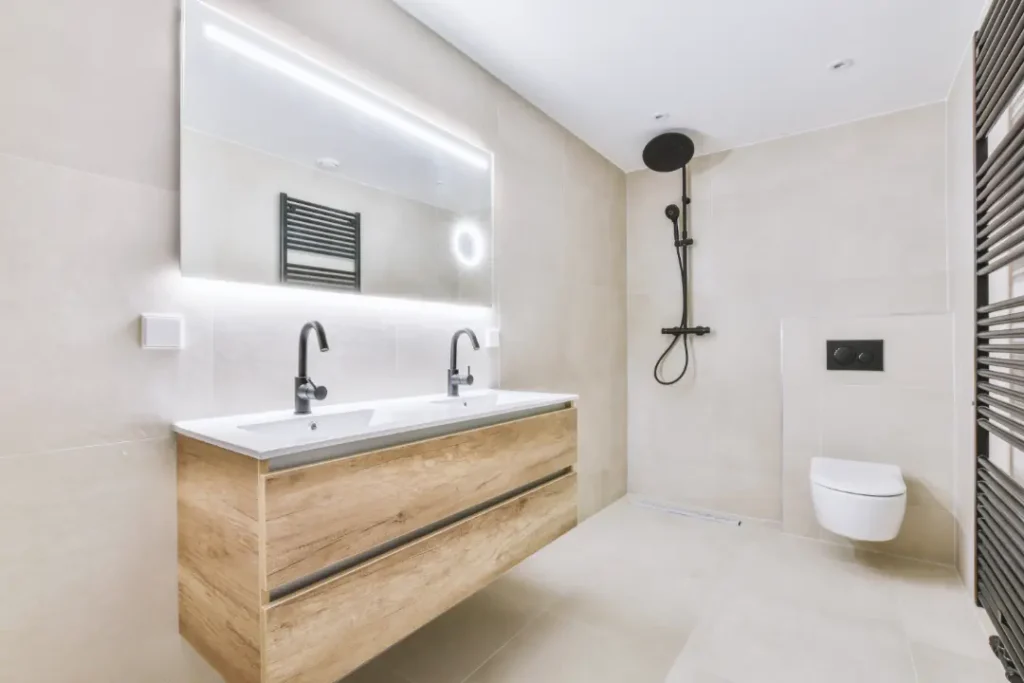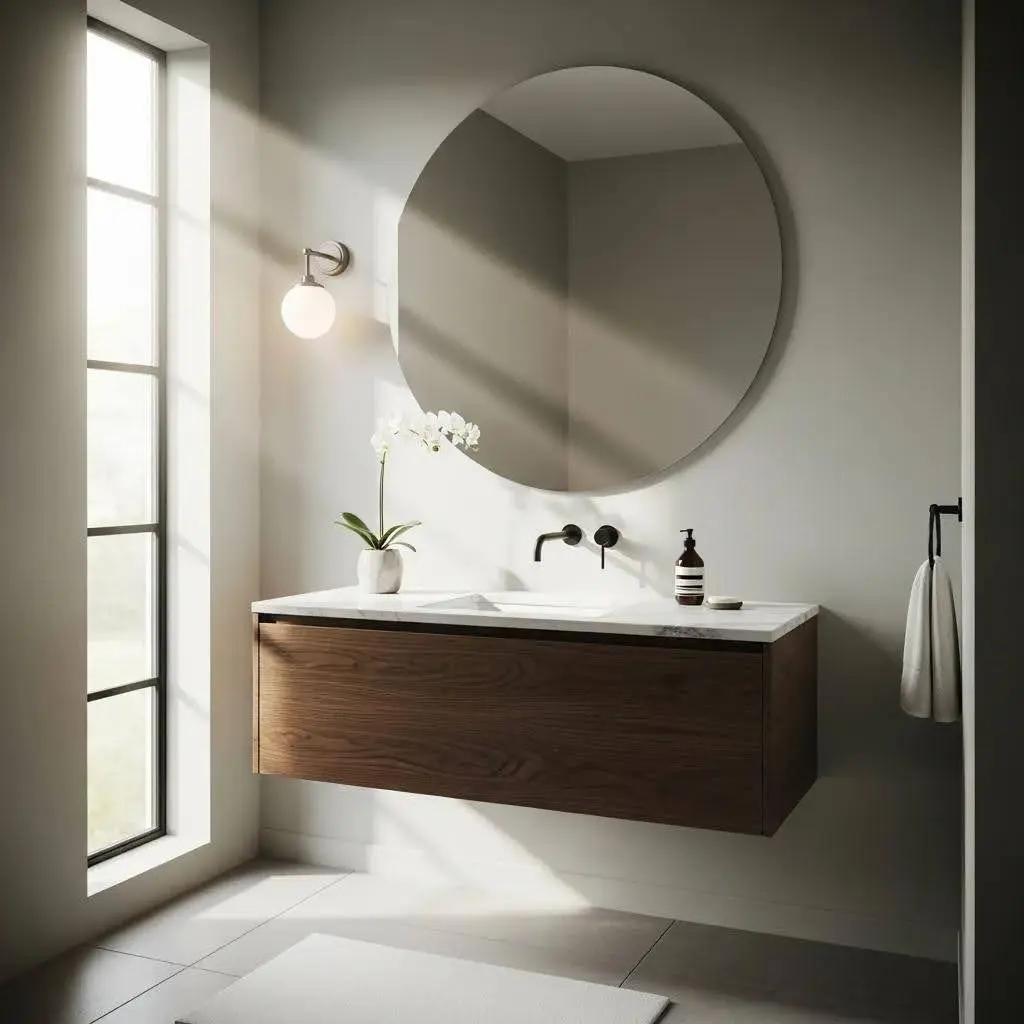
Small bathrooms are some of the trickiest rooms to get right, with tight floor space and awkward layouts making storage, lighting, and a sense of openness hard to achieve.
Mirrors are a simple but high-impact tool: they reflect light, create perceived depth, and give you the grooming surface you need. For London homeowners planning a bespoke renovation, mirror choice is a strategic decision for us at TMT Central Bathrooms.
In this guide, we’ll show how to pick the right shape, size, feature, and placement so a compact bathroom feels brighter, more practical, and quietly high-end, with clear rules and quick checklists included.
What Are the Best Mirror Shapes for Small Bathrooms?
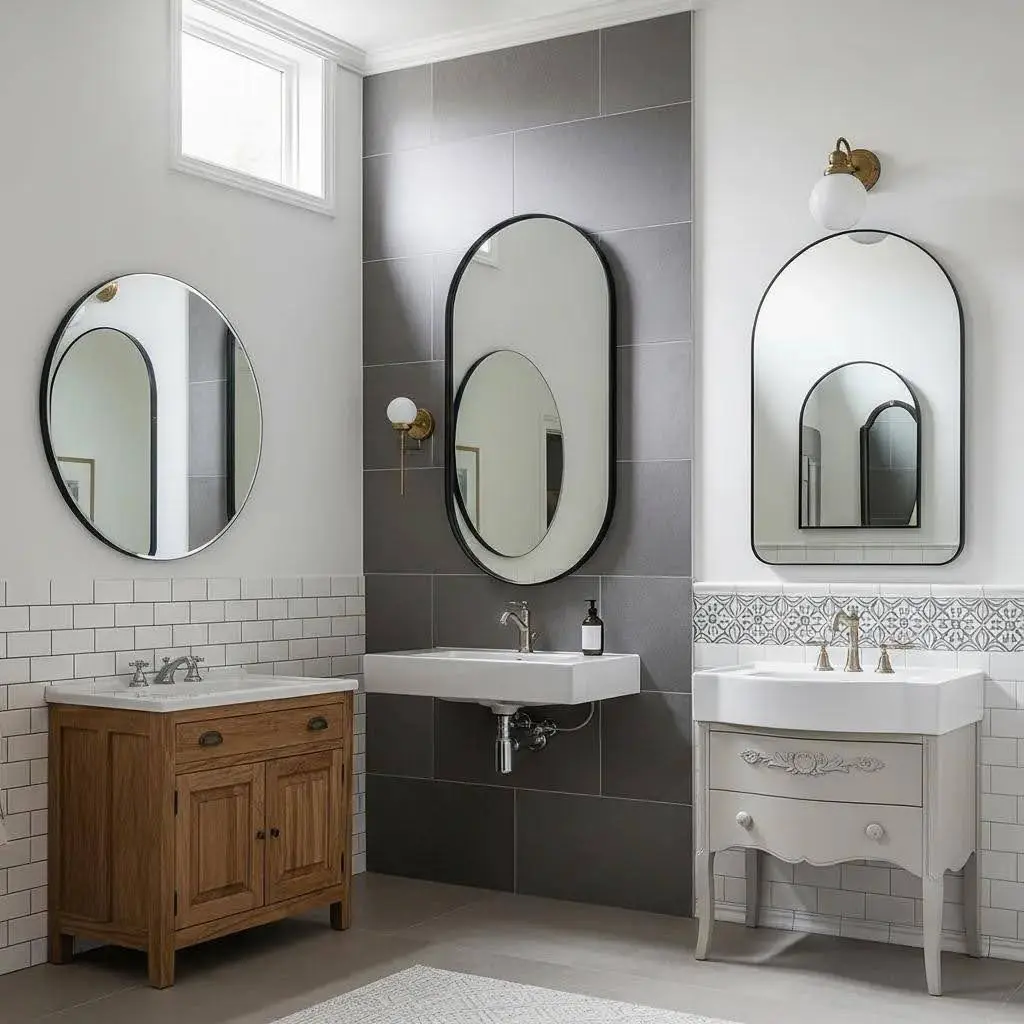
Mirror shape controls visual flow and where the eye rests. It can soften corners, widen a view, or add architectural character. Rounded forms break up boxy lines. Rectangular mirrors emphasise width or height depending on orientation.
Arched or asymmetrical pieces act as bespoke focal points in a luxury scheme. Below is a concise list of common shapes and the visual impact each achieves. It is useful when pairing mirrors with vanities or statement tiles.
Also consider frame material and edge thickness as part of the shape decision. This helps keep the feel light in a small bathroom and prepares for installation choices later.
Common mirror shapes for small bathrooms and their visual effects include:
- Round: Softens sharp angles and creates a gentle focal point without overwhelming the wall.
- Oval: Adds vertical flow and a subtle elongating effect above narrow vanities.
- Rectangular: Emphasises width or height depending on orientation, ideal for standard vanities.
- Arched: Introduces architectural character and a tailored, luxury feel in compact spaces.
- Asymmetrical: Delivers a designer statement and distracts from constrained proportions.
These shape choices will also influence material selection and fixing methods. We cover this next with practical examples and a short comparison table.
Different small bathroom mirror shapes produce clear visual outcomes that help when planning a small bathroom renovation.
| Shape | Visual Effect | Best Use-Case |
| Round | Softens angles and creates a central focal point. | Ideal for small en-suites or above a compact circular basin. |
| Oval | Adds vertical flow and perceived height. | Narrow bathrooms with low ceilings |
| Rectangular | Emphasises width or height depending on orientation | Standard vanities or wall-to-wall installations |
| Arched | Brings architectural, luxury character | Ideal for bespoke renovations and feature walls. |
This table makes it easier to prioritise shapes. Use it when you aim to widen, raise, or add character in a compact bathroom.
Round and Oval Mirrors for Small Bathroom Spaces
Round and oval mirrors are effective because they interrupt rigid geometry. This is useful where tiles and fittings create strong straight lines. A round mirror concentrates attention and works well above a small basin.
An oval pulls the eye up, suggesting higher ceilings. Opt for slim metal frames, bevelled edges, or frameless options to reduce visual weight. The thinner the edge, the less the mirror competes with the room.
These softer shapes pair well with angular vanities and add a discreet luxury note that complements bespoke materials and finishes.
Round and oval options also work well with layered lighting. Rectangular or arched mirrors can be the more functional choice for compact layouts.
Choosing Rectangular or Arched Mirrors for Compact Bathrooms
Rectangular mirrors are the most versatile: orient them horizontally to broaden a narrow room or vertically to lift low ceilings. Arched mirrors combine that elongating effect with an elegant curve that reads like custom joinery or architectural detail.
They are instrumental in tailored renovations. When sizing, allow clearance for taps and fittings. Favour a slim frame or an arch reveal to avoid crowding the basin area.
The right choice here prepares you for the proportion rules and mirror-to-vanity ratios in the next section. Rectangular and arched mirrors should be chosen with vanity alignment and fixture clearances in mind.
How Do You Select the Right Size and Proportions for a Small Bathroom Mirror?
Correct sizing makes a mirror practical and helps it amplify space: a simple rule of thumb avoids visual imbalance. Aim for a mirror that covers roughly 70–80% of the vanity width. This keeps it looking proportionate without appearing too small or overpowering.
Height and eye-level placement matter too. Position the mirror so the centre sits near average eye height and leave adequate clearance above taps and splash zones. These proportional choices influence how mirrors work with lighting and storage. The comparison table and sizing examples show how to apply them.
Practical examples of vanity-to-mirror sizing and clearance rules include:
| Vanity Width | Mirror Width % | Recommended Mirror Width (mm) |
|---|---|---|
| 600 mm | 70–80% | 420–480 mm |
| 800 mm | 70–80% | 560–640 mm |
| 1200 mm (double basin) | 70–80% per basin or wall-to-wall option | 840–960 mm or full-width mirror |
This table helps you match mirror dimensions to common vanity sizes. It also shows when a wall-to-wall mirror delivers the cleanest visual continuity. If you go beyond the 70–80% guideline, you can create a striking result. You will need to consider mounting strength and moisture protection.
Large mirrors amplify natural and artificial light dramatically, yet they also affect humidity management and fixing requirements.
Ideal Vanity-to-Mirror Width Ratio
The 70–80% rule keeps things simple. Measure the vanity and choose a mirror that fills most of the width without touching the cabinetry edges. For a single basin, centre a 70–80% mirror above the sink.
For double basins, fit two mirrors at the same ratio or install a single full-width mirror for a seamless look. Floating vanities can take a slightly larger mirror to increase perceived depth. Framed cabinets may need narrower mirrors to accommodate trim.
These proportion choices link directly to lighting and wiring decisions. Using the vanity-to-mirror ratio ensures visual balance and practical clearance.
Using Large Mirrors to Make Small Bathrooms Look Bigger
Large mirrors increase perceived volume by reflecting light and repeating visual planes. This simple optical trick makes small bathrooms feel roomier. A wall-to-wall mirror, for example, can visually double the apparent space.
Practical limits include secure fixing to studs or reinforced plasterboard with moisture-resistant backing. They also require careful coordination with backlighting or task lights to avoid glare.
For complex installations or when integrated wiring is required, consult a renovation specialist. They will make sure structural and electrical details are correct. Large mirrors work best when paired with layered lighting.
What Functional Features Should You Look for in Small Bathroom Mirrors?
Functional features transform a mirror from a decorative piece into a space-saving, multi-purpose fixture. Storage-integrated mirrors reduce clutter, LED backlighting provides useful task light, and anti-fog keeps the surface usable after a shower.
Each feature has benefits and different installation needs. LED mirrors need a driver and dimmable control. Anti-fog pads need power and safe mounting. Recessed mirrored cabinets require stud-wall space.
At TMT Central Bathrooms, we regularly specify and integrate these premium features into bespoke small-bathroom projects. This means lighting, wiring, and cabinetry work together rather than as afterthoughts.
Use the comparative table below to weigh benefits, installation complexity, and perceived luxury.
| Feature | Benefit | Installation Complexity |
|---|---|---|
| LED backlighting | Improves task and ambient lighting. | Requires a driver, wiring, and dimmer provision. |
| Anti-fog heating element | Keeps the surface clear after showers | Has a low electrical load and needs safe mounting. |
| Mirrored cabinet (recessed) | Adds storage without visual bulk. | Requires moderate carpentry and needs stud-wall space. |
| Frameless with bevel | Feels lightweight and high-end. | Low complexity, but careful fixing is required. |
This table should help you plan around electrical and joinery work during a renovation.
- LED backlighting: Provides even, flattering task light without extra fittings.
- Anti-fog systems: Keep mirrors usable immediately after showers.
- Built-in storage: Mirrored medicine cabinets or shallow recesses reduce visible clutter.
- Smart features (Bluetooth/touch controls): Add convenience and a luxury feel without a bigger footprint.
Choosing the right mix of features depends on wiring access and the finish you want.
Mirrors with Storage to Maximise Small Bathroom Space
Storage-integrated mirrors give you a reflective surface and concealed stowage that helps keep the room calm. Mirrored cabinets can be recessed for a flush finish or surface-mounted for an easier installation. Recessed units need stud-wall depth, while surface-mounted versions must be fixed securely and designed to avoid a heavy look.
For compact bathrooms, consider shallow depths (100–150 mm) so internal organisation is useful without taking up the visual plane. Moisture-resistant interiors and removable shelves make mirrored storage practical and long-lasting for everyday use.
Choosing the right storage mirror usually depends on the wall build-up and plumbing positions. These factors link directly to electrical and lighting considerations.
LED, Anti-Fog, and Smart Mirrors for Luxury Small Bathrooms
LED backlighting can serve as both task and ambient light. It cuts the need for separate vanity fixtures and reduces visual clutter in a small bathroom. Anti-fog systems use low-wattage heating pads behind the glass to keep the surface clear.
They draw little power but must be correctly moisture-proofed and isolated. Smart mirrors add convenience, integrated displays or Bluetooth need mains power and safe wiring routed during renovation. We can advise on wiring runs, driver location, and how to integrate features with existing circuits.
That way, you get premium functionality without compromising safety or aesthetics. Next, we explain placement rules that help these features work together to maximise light and perceived space.
Where Is the Best Placement for Mirrors in Small Bathrooms to Maximise Light and Space?
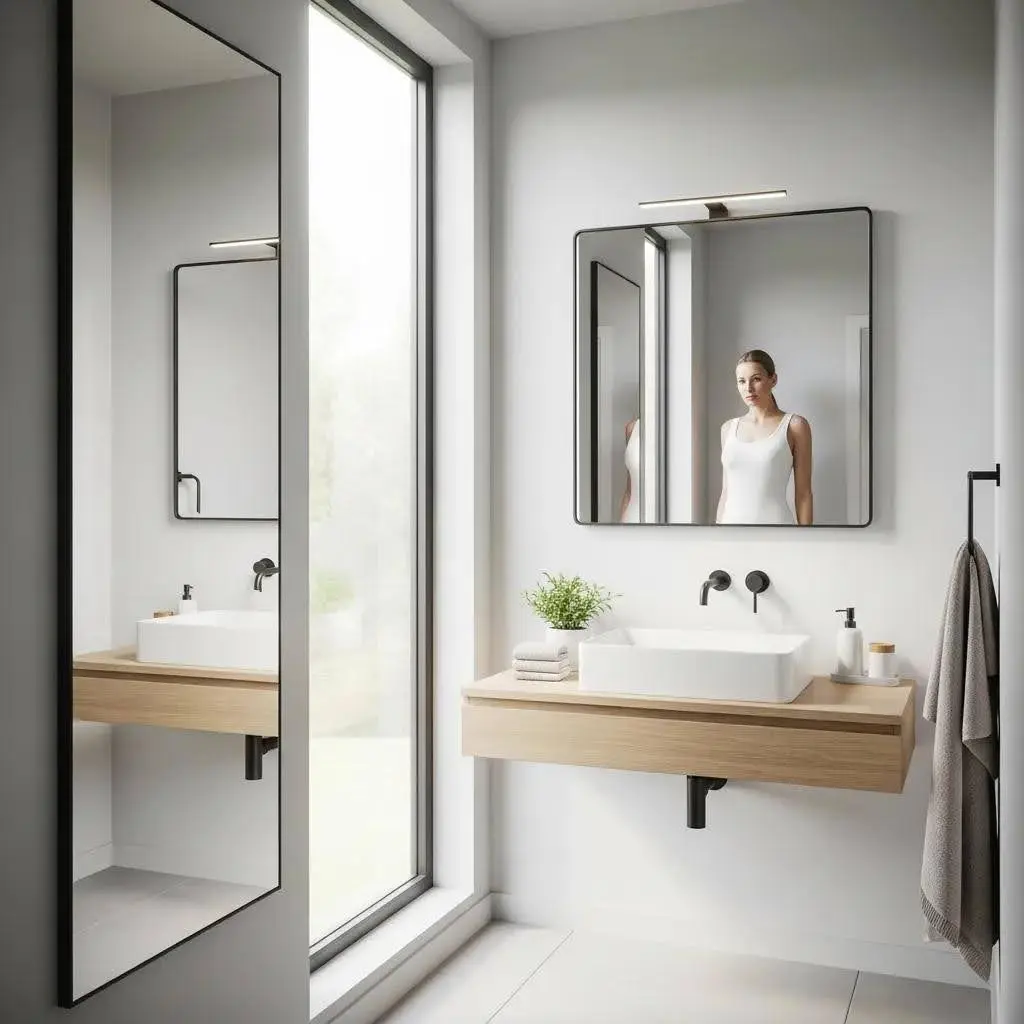
Placement determines how effectively a mirror reflects daylight and creates depth. Position a mirror opposite a window or beside a light source to brighten the room. Vertical placement makes ceilings read higher.
Horizontal mirrors visually widen narrow rooms. Wall-to-wall mirrors provide the strongest continuous plane for very small bathrooms. Think about sightlines from the door and how reflections will interact with fixtures and storage.
This helps you avoid glare or awkward views. The checklist and layout tips below are quick, practical rules you can apply immediately. We also offer tailored consultations if you want a room-specific plan.
Practical placement rules to maximise light and space include:
- Opposite a window: Reflects daylight into darker corners.
- Above the sink: Align the mirror with task areas and centre it at eye height.
- Vertical for height: Choose tall mirrors to emphasise ceiling height.
- Wall-to-wall: For very small bathrooms, a full-width mirror creates continuous depth.
These rules are straightforward to implement and will guide decisions about mirror size and lighting. Thoughtful use of colour, light, geometry, and reflective surfaces can materially change how spacious a room feels.
Mirrors and Interior Design: Modifying Perceived Spatial Dimensions
Elements such as colour, illumination, layout, linear features, geometric forms, and reflective surfaces can alter interior perception. Stylistic choices in furnishings and finishes reinforce these effects. By combining perceptual psychology with considered design, significant spatial effects are achievable.
(Perception and Illusion in Interior Design, A. Jaglarz, 2011.)
| Placement Strategy | Why It Works | Quick Tip |
|---|---|---|
| Opposite window | Doubles natural light and brightens the space. | Ensure an unobstructed reflection path. |
| Above sink | Focuses on task lighting and the grooming area. | Centre the mirror on the basin and leave tap clearance. |
| Vertical placement | Creates perceived ceiling height | Use slim frames to avoid heavy visual lines. |
Understanding these placement strategies helps you plan lighting and wiring. If you’d like help evaluating your layout, a specialist consultation can assist.
Impact of Mirror Placement on Light Reflection and Perceived Depth
A mirror increases perceived depth by reflecting existing light and repeating visual cues, so the brain reads more space. Positioning a mirror to catch window light or a bright wall multiplies luminosity and reduces shadows. This makes finishes and colours read truer.
Angled mirrors can bounce light into corners or create the illusion of extra openings. They require care to avoid reflecting awkward sightlines. These optical principles inform the layout-specific recommendations.
Knowing how placement affects light prepares you to choose mirror locations for common small-bathroom layouts.
Mirror Placement Tips for Different Small Bathroom Layouts
Different compact layouts benefit from specific mirror strategies. In narrow bathrooms, use a horizontal mirror to widen sightlines or a tall vertical mirror to lift the ceiling. For corner basins or shower-over-toilet arrangements, angled or triangular mirrors make the most of limited wall space.
They also keep task lighting effective. In en-suites, integrating mirrored storage above the basin reduces clutter and maintains a clean visual plane.
Layout-specific checklist:
- Narrow: Use a horizontal mirror to widen the room and pair it with a wall light for even illumination.
- Corner basin: Use an angled mirror to capture multiple sightlines.
- Shower-over-toilet: Use a slim mirrored cabinet above the basin for storage.
If you’d like a tailored placement plan, TMT Central Bathrooms offers small bathroom renovations for London homeowners. These sessions review mirror positioning, lighting, and wiring as part of a full small-bathroom redesign.
They also map optimal solutions matched to bespoke finishes and smart features. Thoughtful mirror placement should be considered alongside overall renovation planning.
Frequently Asked Questions
What materials are best for small bathroom mirrors?
Choose materials that withstand humidity and keep the look light. Glass with a protective backing is the standard. Acrylic is a lighter, shatter-resistant alternative. Stainless-steel frames resist rust and suit contemporary schemes.
Bevelled edges or slim frames help the mirror read larger and more refined. Always pick finishes that sit well with your overall scheme and are suitable for a humid room.
How can I enhance the lighting around my bathroom mirror?
Good mirror lighting makes a big difference. Wall lights on either side of the mirror provide even grooming light. LED strips behind the mirror give a soft, modern glow.
Use dimmable fittings so you can adjust brightness for tasks or atmosphere. Position lighting to avoid direct glare and to work with the mirror’s placement for maximum effect.
Are there specific mirror sizes recommended for double vanities?
For double vanities, follow the 70–80% width guideline per basin. That usually means two mirrors sized to each sink, or a single full-width mirror for a clean, integrated look. Height should be considered, too. Position the mirror so it’s useful for users of average height while keeping proportions balanced across the vanity.
What are the benefits of using smart mirrors in small bathrooms?
Smart mirrors bring added convenience and help reduce clutter. Common features include integrated lighting, Bluetooth audio, and touch controls. Some models include small displays for weather or news. These additions require mains power and careful wiring, but can add genuine day-to-day value in a compact bathroom.